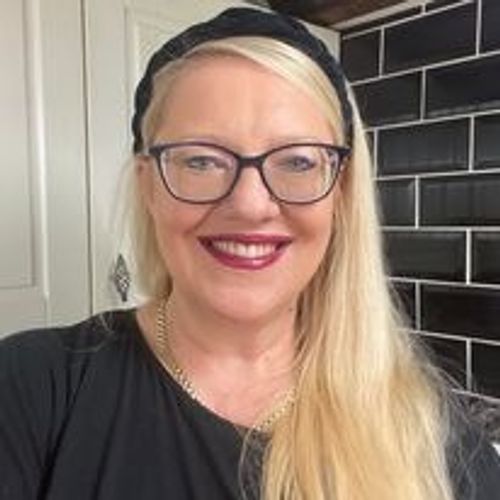
Episode 1
Common Dementia Behaviours
Welcome to my Podcast... Lets Talk About Dementia
I will be sharing some of my experiences, caring for 2 parents who both have Alzheimers / Dementia.
I have been caring for and supporting both of my parents from 165 miles away, so I do appreciate how difficult it can be explaining how to use a remote control over the telephone!
This has caused me lots of anxious times in trying my best to support them.
I also wanted to share my experiences to help others who are on this journey too.
It's a journey that none of us want to be on, however we find ourselves on this journey and it's a journey that we are doing our absolute best on.
Huge hugs and you're doing great!
eUcA2G5Ax0JRjxllpiul
Transcript
Let's talk about dementia.
Speaker:There is a, there is an interesting occurrence that happens with people
Speaker:with Alzheimer's and dementia, and this is a more lighthearted podcast, and I
Speaker:know that a few of my friends and a few people that I know will recognize this.
Speaker:and in a world where there is confusion between what is a dishwasher tablet,
Speaker:and what is a washing machine tablet, and what is a washing machine and what
Speaker:is a dishwasher and what goes in them.
Speaker:So I bet there's people out there whose washing has been done in the dishwasher
Speaker:that's clothes washing . It happens.
Speaker:So in this world of confusion, there is something that people.
Speaker:With dementia are really proud of, and you'll be watching the television.
Speaker:You'll be watching a a program.
Speaker:There'll be times when say, what did they say?
Speaker:What did they say?
Speaker:So you have to keep explaining what people say and what people do, et cetera.
Speaker:And then the credits will come up at the end of a program
Speaker:and your loved one, or your friend, or your family member, et cetera.
Speaker:Will read those credits with such interest and zeal, and if there's a last name
Speaker:that's similar to theirs or if they had a friend at school with a certain name.
Speaker:It's an excitable talking point.
Speaker:It's such a strange characteristic of dementia.
Speaker:So tell me.
Speaker:Does this happen with you?
Speaker:But I know, I know.
Speaker:I have, there are people I know whose loved ones will happily read
Speaker:the credits in their olden world.
Speaker:I remember after a television program where, , I'd be asked so many questions
Speaker:during the program, what was happening?
Speaker:What was that?
Speaker:Who was that?
Speaker:Et cetera.
Speaker:We'd get to the end and my dad would proudly read every single credit and turn
Speaker:around with this big beaming smile on his face as he read them one after another.
Speaker:And it's something that my mom does now as well.
Speaker:And it's strange, but when you, when you have a, an advert, that may say
Speaker:something like Garnet or, you know, Yorkshire tea bags or anything like that
Speaker:there, there's not much interest in that, but as soon as the credits come on, oh
Speaker:my word, there's so many interesting words and names, et cetera that come up.
Speaker:And it's so really interesting part of dementia.
Speaker:Why do, why are the credit.
Speaker:, so interesting.
Speaker:I don't know, but I've seen it, one with dementia, one with Alzheimer's,
Speaker:and, and it's, and it's something that happens with both of them.
Speaker:So as I said, it, it, it's something that will happen.
Speaker:And, and if that hasn't happened yet, , at some point it will start to happen.
Speaker:You just think, oh, and then another one that happens.
Speaker:So we have, we have the credits and then.
Speaker:as you walk driving down the street, you may be driving in
Speaker:a totally different country.
Speaker:I, I remember this happened drove into Ostend and I'm driving through
Speaker:Ostend and Sunland dad says, oh, I know him on that bike there, I
Speaker:thought, but we're in Belgium now.
Speaker:At the time it wasn't so unusual because I've gone abroad with my parents and
Speaker:my dad's met people that he knows at the, at the airport or, you know,
Speaker:gone to watch a match football match, rugby match, and my dad knows lots of
Speaker:people you know there because my dad's been a sports person all this life.
Speaker:And so it, I thought it was rather unusual, but I
Speaker:thought, well, maybe he does.
Speaker:But then it happened.
Speaker:a few hundred yards further down.
Speaker:I thought, well, you can't know both of those cyclists.
Speaker:And then as it happened again, I thought, we can't know all three of these cyclists.
Speaker:And I, again, I dunno the medical explanations of this, it doesn't
Speaker:really matter, but it's just something that you will observe or
Speaker:you may observe as part of this.
Speaker:. And then I remember driving into my local town and suddenly my
Speaker:mom's saying, oh, do you know what they're, they're there every day.
Speaker:Aren't they walking down that road?
Speaker:I thought, but you've never seen it before.
Speaker:And then we'd drive to a town that we'd never driven to
Speaker:before to Brighton and sudden.
Speaker:. My mom is saying, do you know what?
Speaker:Every time we come down this street, them two are always sat
Speaker:outside that cafe, aren't they?
Speaker:And, and I don't know what it is, but this, as you are driving
Speaker:through places for the first time, they will see familiarity there.
Speaker:And again, I've got dementia and Alzheimer's one very aggressive one.
Speaker:Not ag aggressive at all.
Speaker:And, and it.
Speaker:, we see the same behaviors, some of the same behaviors,
Speaker:and probably one of the, the strangest behaviors was, I know that one day we were
Speaker:going back up to Yorkshire, so my parents have been down with me for a little while.
Speaker:. I said, oh, do you know what?
Speaker:Rather than us setting up at tea time, why don't we go for a nice meal?
Speaker:So we went to one of the local restaurants, had a lovely meal set off
Speaker:about eight o'clock and, and drove up up north and my dad was in the back of
Speaker:the car and I kept saying, are you okay?
Speaker:Are you okay?
Speaker:Yeah.
Speaker:Then when we got up to leads my, my dad said, well, I don't know who was driving.
Speaker:I thought, well, and I said, no.
Speaker:I was driving.
Speaker:He says, well, I dunno who was driving, but there were just all these lights
Speaker:and my dad's explanation of it was pretty similar to being in a spaceship.
Speaker:And I suddenly thought being in the back of the car with
Speaker:somebody's head in front of.
Speaker:just seeing lights flashing past must be really alarming.
Speaker:But I then realized that trying to drive at night with people in the car with
Speaker:dementia is a little bit confusing unless they're in the front seat and able to sit.
Speaker:See.
Speaker:and again, it's something that I've noticed with my mom during
Speaker:the day when we're driving.
Speaker:It's absolutely fine when it starts to get dark.
Speaker:She's like, oh, what?
Speaker:What are those lights over there?
Speaker:It's the lights on the road, et cetera.
Speaker:But because I'm sat at the side of her, she's, she's able to cope with that.
Speaker:So again, this is something when you are out and about with somebody with
Speaker:Alzheimer's dementia, if they're sitting in the back of the car, it,
Speaker:it can be quite alarming for them.
Speaker:Sitting in the front is better.
Speaker:However, if you've got two parents, one has to sit in the front.
Speaker:Normally, the one who gets car sick sits in the front, and the one who doesn't
Speaker:get car sick has to sit in the back.
Speaker:But sometimes it, it's.
Speaker:If you can please find somebody to sit in the back of the car with them,
Speaker:cuz it might encourage them and make them a little bit less concerned.
Speaker:As I said, don't, you know, there's some funny, funny things.
Speaker:Be careful of noise,
Speaker:And again, it's only with experience that you get to know this.
Speaker:people talk about triggers, triggers with dementia, triggers that
Speaker:can set a certain behavior off.
Speaker:And, and we, we didn't really know what the triggers were until my dad
Speaker:had actually left the house and had to go into care, et cetera, because his,
Speaker:his aggression was, was off the scale.
Speaker:and I then found out that one of the neighbors had had got somebody
Speaker:to come and do some work at home.
Speaker:And my dad wasn't happy with the, with the noise.
Speaker:And it got to the point where my dad had practically gone
Speaker:outside and hit this person.
Speaker:He'd got so aggressive, really, really aggressive with whoever
Speaker:was trying to do the work.
Speaker:So that might.
Speaker:. Good.
Speaker:Have a chat with your neighbors.
Speaker:Your neighbors will know.
Speaker:They will know that there, there are certain things happening, but
Speaker:to just explain to 'em, look, if you're gonna have any work done,
Speaker:could you please let me know?
Speaker:The only reason why I ask is because said, parent gets quite aggressive
Speaker:over noise, et cetera, and, and it'd be easier if I was there to support them
Speaker:support you or take them out for the.
Speaker:So just be aware of that as well, because I had no idea that the person
Speaker:had actually had to walk off the job because my dad was so, so aggressive.
Speaker:And and, and what I was told was, yeah, the guy, the person who'd come to do the
Speaker:work thought my dad was gonna hit him.
Speaker:So in the end had to walk off and go.
Speaker:It's, it's just how people present when people are presented with a
Speaker:situation, how they react, which is very different how to, how we react.
Speaker:And I, I'll never forget another time, we'd, we'd been we'd driven to
Speaker:behm actually we'd driven to Ira and.
Speaker:I'd got a little bit frustrated with, with the car, with driving,
Speaker:with the same questions, being asked for X number of hours.
Speaker:We've eventually arrived and were ahead of the time when we can check
Speaker:into our apartment, et cetera.
Speaker:So I've stopped the car and I'm waiting to turn right.
Speaker:I said, right.
Speaker:We're gonna get out of here in in a few minutes.
Speaker:Compl, please can we just get parked up and go and sit somewhere and have lunch?
Speaker:Blah, blah, blah, blah, blah, blah, blah.
Speaker:At which point my dad jumps out of the car.
Speaker:You can obviously pick up the fact that I'm a little bit frustrated after
Speaker:driving probably, I dunno how many hours.
Speaker:And then , just the first person that is in front of my dad.
Speaker:My dad's going for, I was just like, I had to jump out the car.
Speaker:We had to get my dad back into the car.
Speaker:We had to get the car parked, and it's just like, oh my word.
Speaker:So if you are driving, please don't display any.
Speaker:Grumblings because they can pick up on it and if they've got aggression
Speaker:attached to their dementia.
Speaker:So we did, we did manage to bond them in the car, get the car parked, then
Speaker:walk, sit in the restaurant and order a lunche and give him a little drink.
Speaker:So just be aware of that when you're driving and when we're
Speaker:talking about going away.
Speaker:I learned quite some time ago that.
Speaker:, we always used to go away and we'd have two hotel rooms, you know,
Speaker:me and my husband, my mom and dad.
Speaker:But then it got to the point where this isn't really working.
Speaker:It, it wasn't necessarily that safe because if they, if they wandered
Speaker:at all, I wouldn't know about it.
Speaker:So then we moved to apartments.
Speaker:Now here's a little bit of advice.
Speaker:So you arrive, , you've got.
Speaker:, two parents, both of Alzheimer's dementia, one of them has walking
Speaker:difficulties and you don't have parking directly under your apartment.
Speaker:You're in the bit middle of a city center.
Speaker:It's a beautiful apartment in one of, one of our favorite places in
Speaker:the world, which is Austin End.
Speaker:We absolutely love it in Austin end, we really do.
Speaker:And we've spent over the last 20 years, I've spent so much time there.
Speaker:Just absolutely love it.
Speaker:So what do you do?
Speaker:You've got to go and park your car, but if you park your car
Speaker:then one of them won't be able to walk back there.
Speaker:Or rather, if they do make it back, then they're going to be Their,
Speaker:their legs and knees are gonna be so sore from all of that walking.
Speaker:So anyway, I decided to leave from the apartment right to stay there.
Speaker:And then I went to park the car, which took me quite some time
Speaker:because it was a bit of a challenge cuz the roads closed, et cetera.
Speaker:So I eventually Park the car, start to walk back and all I can
Speaker:hear is a whole commotion going on about where am I, where am I?
Speaker:Where am I?
Speaker:They're no longer in the apartment.
Speaker:I dunno what floor they're on in this apartment block.
Speaker:I have to go and find them.
Speaker:If there's one thing I can, if I can suggest if you're going away, get an
Speaker:apartment and have somebody else there to.
Speaker:in the apartment while you park the car.
Speaker:. Doesn't matter if it's five minutes or an hour, but oh my word.
Speaker:And by the time I got back there was such a commotion going on.
Speaker:I, I, I got into the apartment and I think I needed a drink.
Speaker:And it can be such a challenge cuz you know, if you are in a
Speaker:hotel, breakfast is at a certain time and breakfast changes you.
Speaker:You have to serve everybody.
Speaker:You have to encourage people to eat.
Speaker:You have to remind people that food is there.
Speaker:You have to, if they don't like that, then get them something else.
Speaker:You have to be comfortable, you know, if they want to wander off and
Speaker:if want needs the low, if the other one doesn't, what you're gonna do.
Speaker:So it's always better to have two people if you.
Speaker:, if not, try and get an apartment with parking downstairs.
Speaker:Which is good, but it just works so much better.
Speaker:The fact that you can have breakfast whenever you want, getting people up
Speaker:and dressed in the morning and take a long time because you're encouraging,
Speaker:you're reminding you're, you are, you know, you're probably having.
Speaker:do somebody's makeup, do their hair.
Speaker:You're, you are having to try and supervise showers, toilets, et cetera.
Speaker:There's a lot to do.
Speaker:You are then also thinking about, well, what, what are we
Speaker:gonna have for dinner tonight?
Speaker:And if you go to Belgium and if you've got an apartment, it's fabulous.
Speaker:You go to all these amazing little places that sell.
Speaker:Cured meats and all sorts, and you can get beautiful things like garlic prawns
Speaker:or fish pies and th they're ready meals, but they are lovingly made by that
Speaker:local butchers or fish place, et cetera.
Speaker:So they have made it that day and, and they're just incredible.
Speaker:So you can, you can make it part of your day that right.
Speaker:We're gonna go and get our evening meal.
Speaker:and we're gonna go and we'll get three of them and we'll get three of them
Speaker:starters and three of them mains.
Speaker:And then we'll go back and we've got a bottle of wine or a bottle of fish or,
Speaker:you know, we've got teas and coffees.
Speaker:We'll go out and have lunch, couple of drinks, a little bit of a wander, and
Speaker:then we'll go back to the apartment because once it gets to evening,
Speaker:it can become a little bit confus.
Speaker:Sometimes some people get a little bit of sundowners.
Speaker:Some people get a little bit of flustered.
Speaker:Some people want a little bit of a snooze, so if you're in an
Speaker:apartment, it really helps that people can just take their time.
Speaker:Oh, if I'd have only known first time when I went my own, my own, own my word.
Speaker:And then at the end, what you've got to do is you've got to go and collect
Speaker:the car and bring the car back.
Speaker:Do you leave them in the apartment or do you take them to the car park with you?
Speaker:In the end?
Speaker:I took them to the car park with me, then drove back.
Speaker:Oh.
Speaker:It was just easier.
Speaker:And going away, you should still go away.
Speaker:y you know, you, you just have to adapt.
Speaker:So hotels don't work so much because it's very rigid and scheduled on meal times
Speaker:when people are coming in to clear clean.
Speaker:Whereas when you rent an apartment, you know it's yours.
Speaker:You, no one's gonna come in and clean it.
Speaker:Well, they certainly don't.
Speaker:And the ones that we go to, it's clean at the end.
Speaker:So you can, you can really do your own times.
Speaker:You know, there's a nice TV in there, you've got a nice set.
Speaker:It's.
Speaker:But what you will find during the night, all of a sudden you'll hear,
Speaker:I dunno if you can hear this, and you can hear, where's the toilet?
Speaker:Where's the toilet?
Speaker:Where's the toilet?
Speaker:So you have to jump outta bed, go and help them get to the toilet and go back.
Speaker:But if they were in a hotel room on their own, they really wouldn't find it.
Speaker:And I do, I do know that we've had some, over the years,
Speaker:we've seen some things happen.
Speaker:I know I'm one of.
Speaker:Our holidays over in, was it, was that in ira?
Speaker:Yes, it was in Ira.
Speaker:I know that during the night , my dad had gone to find, the toilet cause he needed
Speaker:the toilet in the middle of the night.
Speaker:And my husband had also gone to find the toilet and my dad
Speaker:did not recognize my husband.
Speaker:You know, it's the middle of the night.
Speaker:I dunno who this stranger is.
Speaker:. He went back in, he said there's a block out
Speaker:So you have to think about that as well.
Speaker:During the night.
Speaker:They don't, won't necessarily recognize everyone around.
Speaker:and if they do bump into a total stranger in the, just in the hallway, in the
Speaker:apartment that you are, you are renting that can be a bit of a situation and
Speaker:you may have to explain to people.
Speaker:And just be prepared and just chill.
Speaker:And often it is easier to go out for a little bit of a walk during lunchtime,
Speaker:early afternoon and then go back to the apartments or eat safely, comfortably.
Speaker:It doesn't get rowdy on it on a nighttime if you are in your apartment, but you
Speaker:can never guarantee that if you're in a restaurant or if you're in a bar
Speaker:or if you're walking down the street.
Speaker:and actually talking about that people will have little quirks and I think for my
Speaker:dad, what, what he, his wallet was always stuffed, full of notes, plenty of money
Speaker:and keys and his wallet was something that was constantly looking after and losing.
Speaker:and by losing, I mean putting in a safe place.
Speaker:And I'll never forget, we, we were in Austin end, we'd gone there, I
Speaker:think it was for my birthday, this is quite a few years ago, like
Speaker:early on in, up, in dementia time.
Speaker:Anyway, we're walking back from the restaurant and two chaps walked
Speaker:past and said, evening, I'm my dad.
Speaker:We carried on back to the apartment, got into the apartment, and then
Speaker:got to bed and suddenly my dad's flying through our bedroom door.
Speaker:I've lost my wallet.
Speaker:My wallet's gone.
Speaker:It must be them two fellas.
Speaker:Them two fellas must have taken me wallet.
Speaker:So just like groggy, right?
Speaker:Okay, let's start looking around.
Speaker:So we start looking around and it's just like right where we, let's check this.
Speaker:Let's chest that.
Speaker:The apartment goes into absolute opera because when my dad's got so much money
Speaker:in his wallet, et cetera, and it's just like, right where, what happened?
Speaker:Where did you go?
Speaker:When we came back into the apartment anyway, we found
Speaker:his wallet under his pillow.
Speaker:And this is something else that there will be certain things that
Speaker:they are their prize pot possess.
Speaker:And their prize possessions can end up in the strangest places.
Speaker:Keys, locks, wallets wallet tended to be under a mattress or under the pillar
Speaker:and put in jacket in wardrobe in.
Speaker:Overnight and then taken out again.
Speaker:Keys were constantly being lost.
Speaker:We've even found keys that were hidden in the garden buried.
Speaker:We found them when we started doing a little bit of work.
Speaker:, and that's where certain bunches of keys got buried for safekeeping.
Speaker:But I'm sure it was quickly forgotten about where those keys had gone to.
Speaker:Something else that you will find is there will be, and do you know
Speaker:what I, I noticed this with my, my grandma as well who had Alzheimer's.
Speaker:. And whenever something happened, she said, is it in here?
Speaker:And everything could come out of the handbag.
Speaker:So whether it was you know, something that you wanted from
Speaker:the shop, I, I forgot any in here.
Speaker:And, you know, I'm seeing the same, the same with my mom.
Speaker:It's, it's that one safe space.
Speaker:The handbag, that's the trusted handbag.
Speaker:It's got everything in it, all the worldly goods.
Speaker:It's safe.
Speaker:It's.
Speaker:And I'll say, oh, I need a, it could be anything.
Speaker:It could be, I need a, a spoon.
Speaker:I need you know, we, we've lost something.
Speaker:Is it in here?
Speaker:Is it in here?
Speaker:Check in here.
Speaker:And we have found certain things like remote controls in there over the years.
Speaker:That's another thing that things may go missing.
Speaker:Just check the safe places, which is underneath.
Speaker:Pillow underneath the bed.
Speaker:Yeah.
Speaker:And the handbag, it's, it's strange.
Speaker:And, and something else I just want to share, and this is, this was a,
Speaker:a little bit of a shocker, so we've been away to Belgium so much because
Speaker:you know what, we could drive there.
Speaker:I can't think of anything worse than trying.
Speaker:navigate an airport with people with Alzheimer's dementia,
Speaker:it just would not work.
Speaker:And likewise taking a a normal ferry wasn't great.
Speaker:So for rules, it was, we could go in the car, we could go on the,
Speaker:the tunnel, we could go to France, turn left and go up to Belgium.
Speaker:And it was safe, secure.
Speaker:We could take a picnic.
Speaker:We made a day of it, you know, it was an event.
Speaker:It wasn't just traveling and it was.
Speaker:. So when we were on the channel you know, get the picnic out, we'd have
Speaker:the, our bits, we'd go to the duty free a bit before when we could actually go
Speaker:through through tills, et cetera, with my dad , cuz that got a bit challenging.
Speaker:But we could travel and we could have fun and we went.
Speaker:We went to Belgium quite often, but I do remember this one time that'd been away.
Speaker:We'd, we'd, we'd stayed in some beautiful villas, et cetera over there and then
Speaker:we got home and I'd traveled all the way back home and we'd had had a snack
Speaker:when we got home cuz it was quite late.
Speaker:And took me mom up to mom and dad upstairs and, and my mom just said to me, she says,
Speaker:oh, she says, we're going away tomorrow.
Speaker:Aren.
Speaker:and I should have said yes.
Speaker:But what I actually said was we've just come back and these are the
Speaker:little things that they will catch us off guard and we won't see it coming.
Speaker:But my mom just saw the suit.
Speaker:and she also knew that we were going away but had totally forgotten about
Speaker:the last week where we'd just been away.
Speaker:And that's, it's as heartbreaking as it is when we say those things and
Speaker:suddenly you see, you know, your loved one's face drop and say, I can't.
Speaker:Just think, why did we say that?
Speaker:Why?
Speaker:Why did I say that?
Speaker:Why didn't I just say, yeah, we'll go in tomorrow, but we, we are not perfect.
Speaker:We, we can't be prepared for everything.
Speaker:We can't anticipate everything and we don't get everything right, but
Speaker:do you know what We do our best.
Speaker:We had a week away to traveling to our, what is our, as a family, our favorite.
Speaker:Country in the world for me, Thailand and Hong Kong were close second afterwards.
Speaker:But I, I still love, you know, Belgian, that Belgian coast the most.
Speaker:That's, that's, that's our good place.
Speaker:And we, we love going there for years and years and years.
Speaker:So we'd had brilliant memories.
Speaker:We'd had great feelings being there.
Speaker:However, the memory of being there gone, which is a.
Speaker:But we still did it, and it's still important for all of us to make
Speaker:memories, even when those memories may slip away pretty quickly.
Speaker:The memories are all there for you, and that's really, really important.
Speaker:So don't stop making memories.
Speaker:Don't stop going away.
Speaker:Don't stop going out.
Speaker:Don't stop having afternoon tea, lunch, fish and chips, whatever you want to do.
Speaker:Walk around the park.
Speaker:Don't stop doing any of that because it.
Speaker:It's what will make you happy and it makes them happy as well, even
Speaker:if they can't remember very long.
Speaker:So you're doing amazingly.
Speaker:We are all in this, on this journey that none of us want
Speaker:to be on, but all of us are on.
Speaker:Take inspiration from yourself, from what you are doing.
Speaker:Take that You are making a difference.
Speaker:You are doing your absolute best.
Speaker:and just remember to take five minutes of your day for you.
Speaker:That's five minutes where you clear your mind, where you walk out of your
Speaker:house, whether it's walking to that local post, post post box, whether
Speaker:it's walking the fields near you, whether it's walking for a pint of.
Speaker:Just to go out and experience and to feel
Speaker:the weather, the atmosphere, see the blue skies and just try and clear your mind.
Speaker:That is your time, your escapism to be you.
Speaker:I hope that has raise is a smile I made you realize that's happened to me.
Speaker:Take care of you and keep doing exactly what you are doing.
Speaker:You take care of yourself.
Speaker:Much love.